
Green Day
Childhood, Carried Forth Eternally

I have a deep history with Green Day. The band’s music speaks to a meaningful portion of my childhood imagination, eclipsed only by Led Zeppelin and perhaps AC/DC. Despite this, though, my interaction with the band’s full discography is surprisingly limited. I listened to three albums—Dookie, Nimrod, and American Idiot—endlessly, but never cared to explore beyond them. I don’t know why. Honestly, I didn’t even realize there were four other albums alongside those three (let alone seven after them).
Now, faced with the prospect of exploring everything the band has to offer, I wonder if I’ll end up wishing all the “other stuff” had remained in obscurity to me. After all, the band’s long and prolific release history spans a shocking thirty-four years (so far)—there are bound to be some clunkers. Part of what makes Green Day so great, too, is their unvarnished fury and sense of humor. Surely they’ve lost some (or most) of that edge as they move through middle-aged life. And if they haven’t, do I really want to see that?
I’m worried that at the end of this tour, I’ll want to draw the band members into a hug and whisper, “Thank you for everything you’ve done, but please stop.”
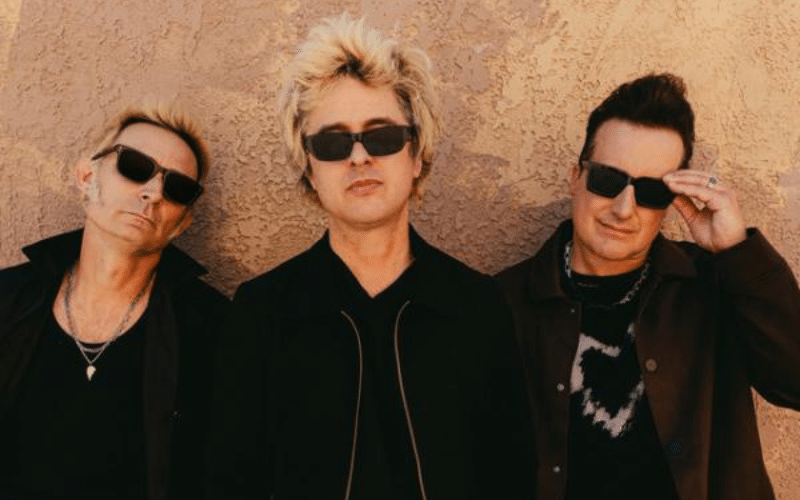

No one. This was a personal choice to fully explore a band that means a lot to me.

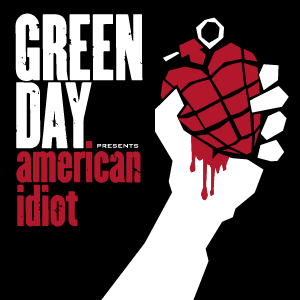
American Idiot (2004)
Led Zeppelin IV is the first album I remember falling in love with. But American Idiot is the first album I remember being overwhelmed by. In retrospect, I sort of can’t believe the nerve Green Day had to make it. Much like Blink-182, Green Day was often in genre limbo throughout the ‘90s. As a band, they were not quite punk if you asked the punk scene, and not quite rock if you asked the rock scene. Despite this, they made a name for themselves as irreverent superstars who played fast, pulverizing music at their wild, illicit-substance-fueled shows. And then they decided to write a “punk rock opera” concept album to give voice to the rising disillusionment and discontent of the post-9/11 generation. Good grief. As a middle schooler, I was perfectly primed to become obsessed. This album felt inescapable. I remember sitting in friends’ basements, watching tapes of their world tour, gawking at the impossible size of the crowds. I remember writing the lyrics to “Are We the Waiting” over and over on my math binder. I remember being aghast that “the F word” (!) was sung so brazenly on the opening title track. I remember listening to the album on repeat while mowing my parents’ lawn. I remember being jealous that every girl in my grade had a crush on Billie Joe Armstrong and not me. I remember sitting with my friend (and future bandmate) as he showed me that he learned how to play “St. Jimmy” on guitar. I remember thinking “Wake Me Up When September Ends” was the most poignant song a musician could write (it’s not). I remember trying to impress my friend’s dad by reciting the spoken-word section of “Holiday” when the song blared as part of the soundtrack to the video game Tony Hawk’s American Wasteland. I remember my confused amazement at a nine-minute track called “Jesus of Suburbia,” which had different movements, like a piece of classical music or something (“Are they allowed to do that?”). I remember feeling like “Boulevard of Broken Dreams” was about something that seemed so important, even if I didn’t understand what that something was.
This wasn’t the last time I became obsessed with an album, but it was the first time. At this age, I don’t feel this way about albums anymore. I don’t think I could if I tried, but I’m so grateful that I had the experience of an album completely dominating my consciousness.
The best part? As an adult, it somehow holds up, and the tracks that catch my ear the most now are the deep cuts I often passed by as a teenager. I love this album.
Favorite song: “Give Me Novacaine”
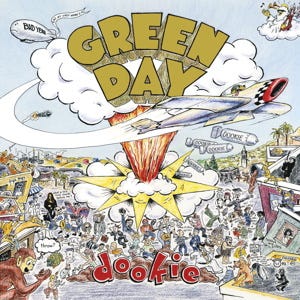
Dookie (1994)
I don’t get embarrassed easily. I often joke with my students that it’s like a superpower of mine; then, they’ll usually ask me to do something that they deem extremely embarrassing to prove it. I remind them that just because I don’t get embarrassed doesn’t mean I don’t have any wisdom or discernment about what I should or should not do. I do, however, have an embarrassing memory related to this album. In late elementary school, I was going to meet a friend at the bowling alley; before I left on my bike, I called his house to tell him to bring his copy of Dookie to the bowling alley because I had something “so cool” planned. I was going to ask the employee to play the CD so that we could listen to the album while bowling—yes, that was the entire “so cool” plan. Its coolness was rooted in the notion that this album was a bit “taboo,” especially for me as an elementary school kid. And everyone at the bowling alley would see my friend and me singing along to the songs, knowing that we were awesome—so, so awesome. I remember my friend being less enthusiastic about my plan than I was, but I assured him how excellent it would all be. After starting our first frame, I approached the counter, CD in hand, and made my request to the employee (who, in retrospect, was probably just a high school student). He snorted out a laugh, didn’t answer, and walked away.
It’s the kind of story that makes you smile a bit—it’s cute, but ridiculous. Ultimately, a harmless interaction that felt enormous at the time.
What does this story have to do with listening to the album now? Nothing, I guess, other than demonstrating that this album and I go way back. If it weren’t for the magnitude of American Idiot, this would be an easy top pick—it’s packed with hits, all of which hold up, and represents Green Day’s true breakout into the mainstream (and, honestly, the mainstream breakout for the genre as a whole, too). The tracks are plain fun and listening to it as a whole is a blast; it brought back forgotten memories (learning the guitar solo—if you can call it that—from “When I Come Around”) and fresh insights (the perfectly placed bass line on “Sassafras Roots”).
Favorite song: “Basket Case” or “When I Come Around”
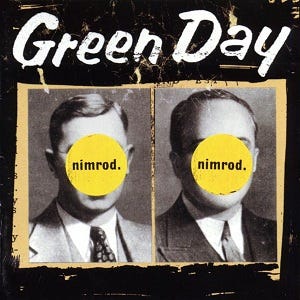
Nimrod (1997)
I don’t play guitar much these days—most of the songs I learned to play are metal songs, and an acoustic guitar lying around the house doesn’t lend itself to that all too well. There are maybe ten songs, though, that I can still play on acoustic guitar from memory: “Sam Malone” by City and Colour is one of them, and “Good Riddance” by Green Day is another. I remember sitting on my childhood bed, portable boombox next to me, thinking that “Good Riddance” was the most beautiful song that existed as I tried to learn to play it from tabs I printed from Ultimate Guitar (does that site even exist anymore?).
It would have been basically impossible to top the hit factory of the two albums ranked above this. While the hits aren’t as huge or as frequent, Nimrod is more interesting than Dookie, filled with dynamics and creative choices that previous albums lack. For these reasons, I think, the songs sink down a bit deeper for me. It’s not as “fun,” but it has a different appeal, all while maintaining the punk rock energy and manic essence of the band.
Favorite song: “Redundant” or “Good Riddance (Time of Your Life)”
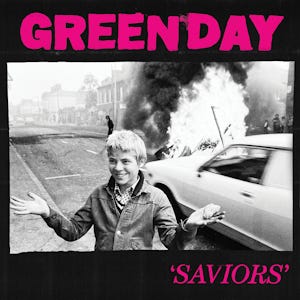
Saviors (2024)
I recently saw a video of Billie Joe Armstrong playing a cover of “I Think We’re Alone Now” in his home studio alongside his two kids, who filled in on drums and bass. A neat moment, yes, but one that made me think, “Ah, so we’re in this era now—bummer.” I admire his connection with his family, but it felt a little bit like seeing someone in middle age order a salad instead of a burger because they want to avoid indigestion, or go to bed at 8:30 after stretching and saying, “gosh, I’m pooped!” Not bad choices, to be sure, but clear signs that they’ve lost a step—cue BJA playing cover songs at home with his kids. Saviors, though, offers a different story: chugging fury, blunt (and a bit inane) political and cultural critique, and soaring melodies, all held within a songwriting maturity that only decades of experience can provide. Maybe Armstrong, Dirnt, and Cool do order salads and tea on tour these days instead of burgers and beer. Maybe they take sensible naps before a show. But they’ve still got it, and I was wrong to doubt them.
Favorite song: “Look Ma, No Brains!”
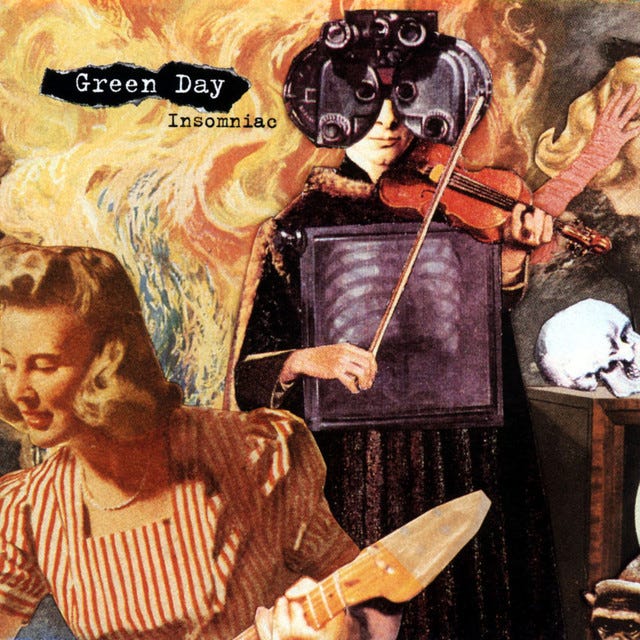
Insomniac (1995)
This album was largely new to me, despite being right in the middle of Green Day’s supposed “golden era.” How’d I miss it? Given that we were still in the age of physical media, the simple answer is that no one I knew had a copy of it, and I hadn’t yet discovered burning CDs with songs I found on LimeWire. This album is heavier and angrier—messier. I respect the fact that despite having a commercial breakthrough with Dookie just a year before, the band went in a direction that essentially gave a middle finger to the doors that opened because of the album’s success, creating a sound that was sure to turn many of its new fans away. I don’t enjoy this album as much as others, but I get the sense that’s sort of the point.
Favorite song: “Brain Stew”
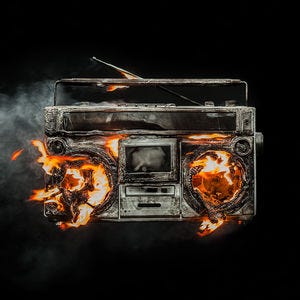
Revolution Radio (2016)
After a series of releases that could most charitably be described as daring and creative (or uncharitably described as gimmicky), this album is a refreshing return to form. Though I don’t think they’ll ever quite shake the grandiose, anthemic ballad impulses that their “rock-opera era” produced, this feels like the bandmates sat down, took an honest look at each other, and decided to just write a true Green Day album again. I probably don’t like this album as much as its high ranking suggests, but it benefits from its placement in the discography.
Favorite song: “Still Breathing”
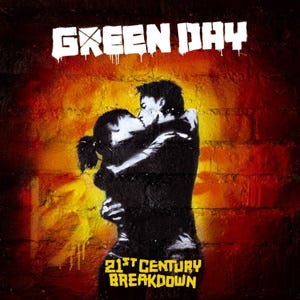
21st Century Breakdown (2009)
No doubt fueled by the confidence and energy from American Idiot and the success of pulling off an audacious concept album, Green Day decided that a second, sappier Rock Opera was the next right step. It wasn’t. Don’t get me wrong: this album is still a fine listen and has some of the same earworm melodies that are central to the band’s sound, but most of this album is just obnoxious.
I don’t want to see Shaquille O’Neal play a genie in Kazaam. I don’t begrudge him trying to explore new creative outlets, but acting just isn’t for you, Shaq. Similarly, I don’t want to hear Green Day’s take on a Rock Opera. Give me irreverent, two-minute punk rock chuggers instead.
Favorite song: “Murder City”
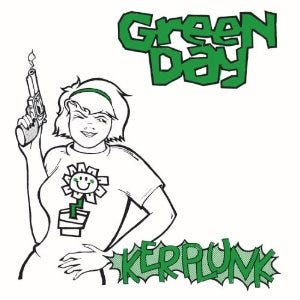
Kerplunk (1991)
Having young children means receiving lots and lots of drawings from them as gifts. The drawings are cute and funny, often revealing a lot about their current state of development. For example, my son is ain a phase in which he enjoys drawing animals fighting each other, and he depicts this by drawing the lion standing on top of the bear’s back.
It’s very sweet, and I keep many of them, but keeping all of them would mean dedicating an entire closet to storing these drawings, most of which are indistinguishable from one another. So, I keep some and chuck some.
This album is an impressive step forward just a year from their debut release, but it still sounds like a half-baked representation of the Green Day that would emerge just a few years later. Most of the songs sound like demo tracks recorded in a garage, largely indistinguishable from one another. I’ll keep one song from this album and chuck the rest.
Favorite song: “Who Wrote Holden Caulfield?”
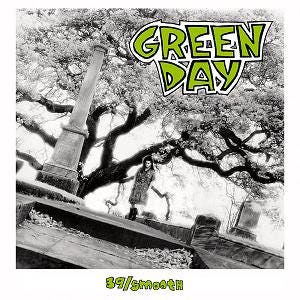
39/Smooth (1990)
Something I’ve learned about myself from embarking on The Great Discography Tour is that I usually don’t enjoy a band’s debut record. Of course, there are exceptions to this rule (e.g., Led Zeppelin, The Beatles, Black Sabbath, Third Eye Blind, The Band), but, most of the time, a debut album is too far a departure from the band’s mature and developed sound that I know and enjoy. 39/Smooth is no exception. It’s fine, and that’s all.
Favorite song: “Paper Lanterns”
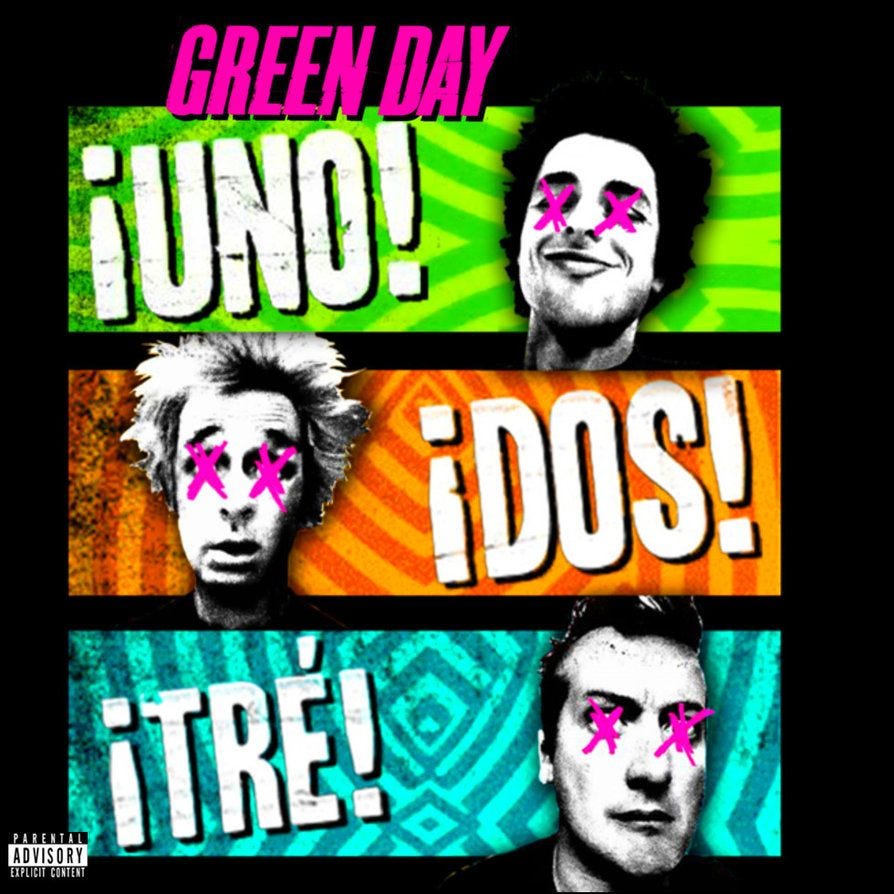
¡Uno!, ¡Dos!, ¡Tré! (2012)
Green Day took a page from Paul McCartney’s book and threw quality control out the window by favoring quantity over quality with a trilogy of albums containing thirty-six songs, all released within a four-month span. They are all independent albums, but treating them as such is a bit too generous, in my opinion—they’re getting the package-deal treatment. I’m confident there’s a solid single album between these three, but, even then, I think it’d just be okay. Like a good foot soldier, I put my head down and trudged through these.
Favorite song: “Stay the Night”
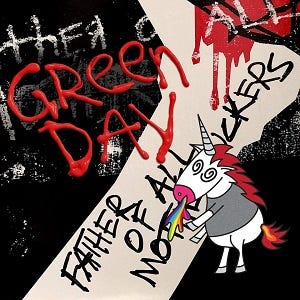
Father of All . . . (2012)
Yikes.
Favorite song: “Fire, Ready, Aim”

At the beginning of this discography tour, I was concerned that exploring the full scope of Green Day’s music would be a bad choice, one that might reveal a bunch of junk and taint the good stuff that I love. That concern wasn’t entirely unfounded, but, once again, the discography tour did its job: I appreciate and enjoy Green Day more, not less, for having made the trek.
At some point, I think it’ll be best for everyone if Green Day stops releasing records. Johnny Knoxville has the right idea in putting a halt to any future Jackass movies: no one wants to see senior citizens have their ribs shattered by a bucking bull, and no one wants to hear sixty-five-year-olds play punk music (an idea that sounds like an oxymoron). That point, though, is not now. Keep moving forward, Green Day, and, at least for now, I’ll keep moving forward with you.
Link to “Favorite Songs” Spotify Playlist
- Matt